3 Tiles - Tile Matching Games
- 4.4
- Rating
- 10.00M
- Installs
- Free
- Price

 Analysis by App-foxy
I found 3 Tiles - Tile Matching Games easy to understand within a few seconds and surprisingly good at filling short gaps in the day. It is a free board game from Appsyoulove built around matching tiles, with a calm presentation and a simple objective that does not require a tutorial-heavy commitment. My first impression was favorable: I could begin a round without preparing, stop when I needed to, and return later without having to remember a complicated story or control scheme.
That simplicity is both the reason it works and the main question hanging over it. Tile-matching games often feel excellent during the first week, when every board seems to offer one more small puzzle to solve. The more important test is what happens after the novelty fades. Does the game become a pleasant habit, or does it turn into something I open only when I have exhausted every other option? After spending time with it, I see a useful place for this game, but not for every kind of player.
How the first week feels
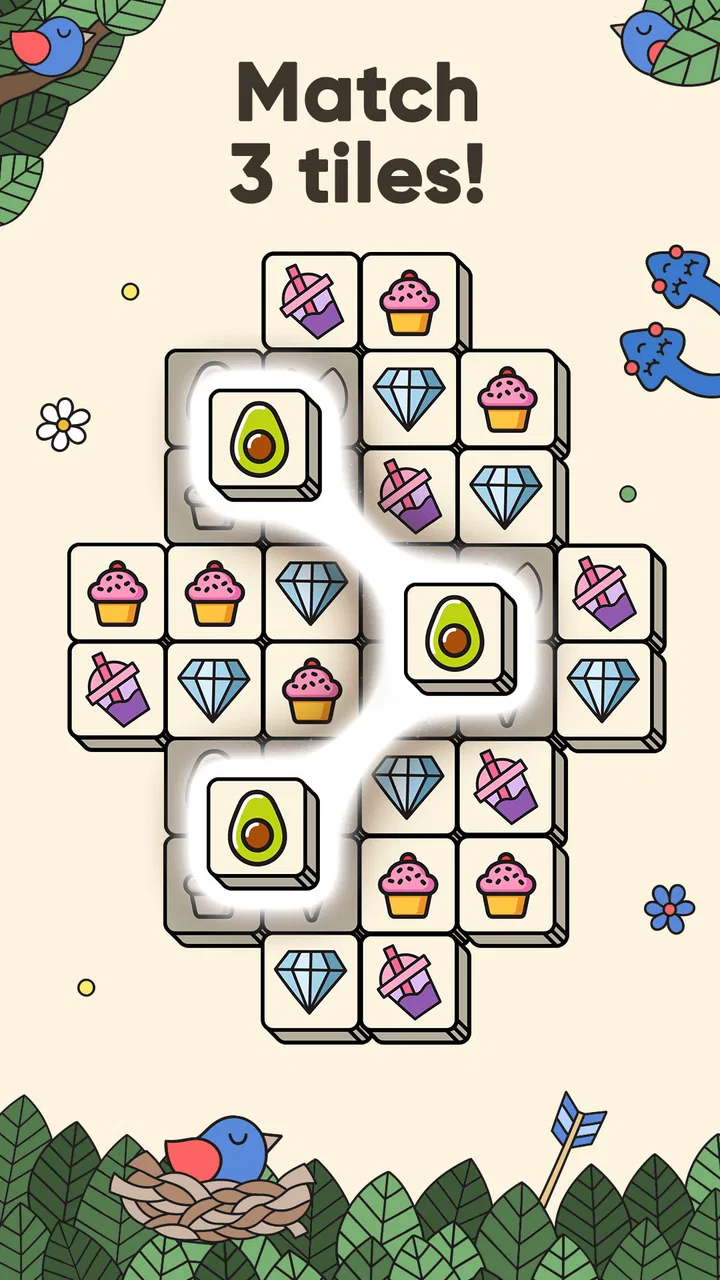
The opening experience is deliberately approachable. Matching tiles gives the game an immediate rhythm: scan the board, identify a possible set, make a choice, and watch the layout change. There is no need to learn a large rulebook before feeling competent. That makes it suitable for a quick break, a quiet evening, or a moment when I want light mental activity rather than a demanding strategy session.
You May Also Like

 Pandora - Music & Podcasts
Pandora’s Music Is Easy to Start, but Harder to Recover
Pandora’s strength is its low-effort path from a seed to a station. Its weak spot is how much confidence it asks you to place in connection, setup, and quiet recovery.

 AccuWeather: Weather Radar
AccuWeather Review: A Quick, Clear Forecast for Everyday Decisions
For everyday plans, the best forecast is the one you can understand quickly. AccuWeather makes rain timing, radar, and local conditions easy to act on, with a few trade-offs.

 Hill Climb Racing
Why Hill Climb Racing Still Turns Crashes Into One More Run
A tiny car, a bumpy hill and one more upgrade: Hill Climb Racing keeps resurfacing because its simple chaos makes every near-miss feel personal.

 AliExpress - Shopping App
AliExpress Makes Global Shopping Feel Personal, but Shoppers Bear the Risk
AliExpress turns a global marketplace into a pocket-sized discovery engine. Its reach is useful, its shopping loop compelling, and its trade-offs easy to miss.

 Lords Mobile: Kingdom Wars
Lords Mobile Is a Kingdom-Building Routine, Not a Quick Match
A case-by-case verdict on the building, battles, device demands, and social commitments that make Lords Mobile rewarding for some players and exhausting for others.

 PDF Scanner app - TapScanner
TapScanner Makes Paperwork Easier to Capture, Check, and Share
TapScanner makes scanning with a phone feel less like a rescue operation and more like a dependable step in getting work done. Its capture tools are useful, though not flawless.
More From Our News Desk
View All News


I particularly liked the low-pressure character of the basic idea. The game presents itself as a way to train attention and relax, but I would describe it more precisely as gentle visual sorting with occasional tension. The board still asks me to think ahead, because taking an attractive match too early can leave a less useful arrangement later. It is not deep strategy in the sense of a full board-game simulation, yet it rewards patience more than mindless tapping.
During the first few sessions, the strongest appeal came from the short decision cycle. A move takes almost no time to understand, but several moves together create a small planning problem. That balance makes the game feel active without becoming exhausting. I can play while waiting for an appointment or during a short commute, provided I am not in a situation where concentrating on the screen would be unsafe or inconvenient.
The visual tile format also makes the game accessible to people who do not usually play mobile games. Someone who avoids action games, complex role-playing systems, or competitive multiplayer can understand the basic appeal immediately. The Everyone content rating reinforces that broad accessibility. I would still treat it as a screen activity rather than a substitute for rest, but it is a friendlier starting point than many games that expect fast reactions or extensive gaming experience.
One useful habit appeared quickly: I stopped choosing matches only because they were visible. Instead, I began checking which tiles would remain available afterward and whether a move would reduce my future options. That small change is where the game has more substance than its short description suggests. It encourages visual scanning and delayed decisions, even if the overall experience remains casual.
The game is also easy to recommend to a particular kind of player: someone who likes sorting, pattern recognition, and tidy visual progress but does not want a large time commitment. If you enjoy arranging objects, clearing clutter, or solving small puzzles while listening to music or a podcast, the format may fit naturally into your routine. It is less suitable for anyone looking for a strong narrative, character development, or a competitive community.
By the end of the first week, I understood the central attraction. The game does not ask me to become invested in a fictional world. It asks for a few minutes of attention and gives me a compact mental task in return. That is a reasonable exchange, especially when I want something more engaging than passive scrolling but less demanding than a serious puzzle game.
What makes the routine work
The best way I found to use it was to give each session a clear boundary. I would play a small number of rounds during a break instead of opening it with the vague intention of continuing indefinitely. This matters because the game’s simplicity can encourage automatic play. A defined stopping point preserves the relaxing quality and prevents the activity from becoming another endless feed.
I also found that it works better when I am mildly alert rather than completely tired. When I am exhausted, matching tiles can become repetitive and I make careless choices. When I have a little energy, the same board becomes a pleasant exercise in observation. That makes it a good afternoon reset or short evening activity, but not always the best choice immediately before sleep if completing “one more” round keeps me engaged.
The free entry point is important here. I can test the basic loop without making a purchase first, which lowers the risk of discovering that this style is not for me. The game includes in-app purchases ranging from $0.99 to $35.99 per item, so I would approach optional spending deliberately rather than treating every convenience as part of the normal cost of playing.
Whether it earns a place after the novelty fades
When I decide whether a casual game deserves a spot on my phone, I look past the easy first sessions and ask whether it still fits a real routine. Here, the useful test is whether the short matching activity remains a welcome pause rather than becoming an automatic tap-through. That longer view also makes it easier to judge the purchase model calmly, which is where trust matters most.
Month-to-month value depends on your reason for playing
After the initial excitement settles, the game’s value becomes more personal. If I want a dependable five-minute puzzle ritual, it continues to make sense. The rules are light enough that I do not need to relearn them after a few days away, and the visual matching format remains approachable when my attention is limited. That kind of repeatability is a genuine strength.
However, repeatability is not the same as endless variety. Players who need a constant stream of new mechanics may eventually feel that the central action has become familiar. I would not choose this as my only mobile game if I wanted long-term discovery, a changing story, or a sense of mastery that keeps expanding. Its lasting value comes from the comfort of the loop, not from dramatic reinvention.
That distinction helps explain the game’s broad reach. It has a 4.4 average from around 249 thousand ratings and more than 10 million installs, which suggests that the straightforward format has connected with a large audience. Those figures do not guarantee that every player will enjoy it, but they do match my experience of a game designed for immediate understanding rather than specialist tastes.
For month-to-month use, I would place it between a traditional casual puzzle and a relaxation tool. It can sharpen attention for a few minutes, but I would avoid calling it a serious brain-training program. The mental benefit is practical and modest: I am looking carefully, comparing options, and resisting impulsive moves. That is worthwhile, but it should not be confused with a structured educational course or a demanding logic challenge.
One of the more useful ways to keep it fresh is to change the purpose of a session. Sometimes I play for speed, sometimes I focus on making safer choices, and sometimes I use it simply to interrupt a stressful scrolling habit. The boards may not need to change dramatically for the experience to feel different when my own goal changes. This is a small but effective maintenance trick for a game built around a fixed core action.
I would also recommend using it as a transition activity rather than a primary destination. For example, after finishing work, I might play briefly before moving to a different task. The game provides a clear mental shift without requiring the emotional investment of a story game. In that role, it has more lasting value than it would if I expected it to entertain me for hours every day.
Maintenance is light, but not completely effortless
The current version is 8.3.0.0, and the game runs on Android devices using version 6.0 or later. That makes it accessible to many older phones and tablets, which is helpful for a simple board game that does not need cutting-edge hardware. I appreciate that the basic format does not make me feel I need a premium device to enjoy it.
Still, keeping a casual game in regular rotation requires a little discipline. The first task is managing expectations around purchases. Because the game is free to start and offers individual purchases between $0.99 and $35.99, I would decide in advance whether I am willing to spend anything. A fixed personal limit is more sensible than buying impulsively after a difficult board or a frustrating pause in progress.
The second task is noticing when the game has stopped serving its purpose. If I open it automatically and no longer feel either relaxed or mentally engaged, taking a break is better than forcing a daily routine. A maintenance habit should preserve value, not turn entertainment into an obligation. I would rather return after several days with fresh attention than continue playing only because the icon is familiar.
There is also a practical difference between using the game casually and trying to make it a serious personal challenge. Casual players can stop whenever the session feels complete. More goal-oriented players may want to track improvement or pursue increasingly difficult situations, but the appeal may weaken if the available experience does not provide enough variation for that ambition. In that case, a deeper puzzle title would probably be a better long-term companion.
Its Everyone rating makes it a reasonable household option, but I would still explain the purchase model to younger players before handing over a device. The content itself is approachable; the more important conversation is about whether optional items are allowed. That is a simple family safeguard and does not require treating the game as unsuitable.
Where fatigue begins
The main source of fatigue is repetition. Matching tiles is satisfying because it is immediately legible, but the same clarity can become predictable. Once I have internalized the basic rhythm, the emotional reward of clearing a group is smaller. The game remains pleasant, yet it may shift from “I want to see what happens next” to “this is a familiar way to pass time.”
Another source of tiredness is the tension between relaxation and optimization. If I play casually, I can enjoy the visual sorting. If I start analyzing every move, the activity becomes more mentally demanding and less restful. Neither approach is wrong, but switching between them without noticing can make the game feel inconsistent. I found it better to decide before a session whether I wanted a calm diversion or a more careful puzzle exercise.
Players who dislike monetized free games may also feel friction even when they never buy anything. The presence of optional purchases can change how I judge the pacing, especially if I begin wondering whether a difficult moment is designed to encourage spending. I would not recommend this game to someone who wants a completely self-contained paid experience with no purchase prompts or commercial interruptions.
It can also disappoint people seeking social competition. This is a solitary board-style experience, not a substitute for a multiplayer match, a word-game community, or a board-game night with friends. Its strength is private concentration. If the main reason you play games is to communicate, compete, or share progress with other people, another category will serve you better.
The game is not ideal for players who need a strong sense of final completion either. Casual matching can be satisfying in the moment, but it does not necessarily create the same lasting memory as finishing a campaign or solving a carefully authored puzzle set. I would skip it if I know I need a clear narrative payoff, substantial strategic depth, or a large collection of distinct systems to stay interested.
How it compares with familiar alternatives
Compared with traditional tile-matching games that emphasize fast combinations, this one feels better suited to deliberate observation. It is not the choice I would make when I want bright action, rapid reactions, or a score-chasing rush. Its appeal is quieter: examine the arrangement, choose a match, and preserve enough flexibility for the next decision.
Compared with classic tabletop matching games, it offers convenience rather than the social presence of physical pieces and another person across the table. I can use it alone without setting anything up, but I lose the conversation and shared tension that make tabletop play memorable. For a solo break it is more practical; for a social evening it is clearly the weaker option.
Compared with deep logic-puzzle apps, it asks for less learning and usually less sustained concentration. That makes it more welcoming but also less intellectually ambitious. I would recommend a dedicated logic game to someone who wants complex deductions and a stronger feeling of solving a designed problem. I would recommend this one to someone who wants a gentler mental warm-up that can be paused easily.
Compared with passive entertainment, the game has a modest advantage: it asks me to participate. I must notice patterns and make choices instead of simply watching. That does not make it automatically better, but it gives the short session a little more purpose. The trade-off is that even light participation can become tiring when I am already mentally overloaded.
My long-term verdict
After the novelty fades, I think 3 Tiles - Tile Matching Games earns lasting space for the right player, but not as an all-purpose game. I would keep it installed as a compact, low-commitment option for breaks, transitions, and quiet moments when I want to focus on something simple. Its strongest quality is consistency: I know what kind of experience I am opening, and that predictability is useful when I do not want surprises.
Its weaknesses are equally clear. The core loop can become repetitive, optional purchases may bother players who prefer a clean paid model, and the game does not replace a deeper puzzle, a social board game, or a story-driven adventure. I would also avoid turning it into a compulsory daily habit. The game works best when it remains available rather than demanding.
Appsyoulove has made a board game that is easy to enter and easy to revisit. The free price makes trying it straightforward, while the Everyone rating keeps its audience broad. On Android, the minimum requirement of version 6.0 or later also means it is not restricted to recent hardware. Those practical details support the game’s role as an accessible casual pastime.
My recommendation is simple: install it if you enjoy visual matching, want short sessions, and value a calm routine over constant novelty. Give it a fair first week, then judge it by whether you still choose it naturally after the excitement has settled. If it continues to help you pause, concentrate, or reset, it has earned its place. If every session feels like repeating the same task without pleasure, move on without guilt. The lasting value here comes from fitting the game into your life, not from forcing your life to revolve around it.
FAQs for 3 Tiles - Tile Matching Games
01What is 3 Tiles - Tile Matching Games, and how do you play it?
3 Tiles - Tile Matching Games is a casual puzzle game based on the classic tile-matching format. Your goal is to find and select three identical tiles from a layered board to clear them. You need to plan each move carefully because the tray has limited space, and selecting tiles in the wrong order can quickly block your progress. As levels advance, layouts become more complex and require better observation and strategy.
02Is 3 Tiles - Tile Matching Games free to download and play?
The game can generally be downloaded and played for free, allowing you to access its main puzzle experience without an initial purchase. However, like many free mobile games, it may include optional advertisements, bonus offers, or in-app purchases. These purchases can sometimes provide extra hints, boosters, or other conveniences. Before downloading, check the current Google Play or App Store listing for pricing, advertising details, and available purchase options.
03Does the game work without an internet connection?
Many of the basic tile-matching levels can usually be played offline, which makes 3 Tiles - Tile Matching Games suitable for short sessions while traveling or when mobile data is unavailable. Nevertheless, certain features may require an internet connection, including advertisements, rewards, cloud synchronization, events, updates, or purchases. Offline availability can also vary between versions, so it is worth testing the game after installation rather than assuming every feature will work without connectivity.
04Is 3 Tiles - Tile Matching Games suitable for children and casual players?
The simple controls and easy-to-understand matching rules make the game accessible to casual players and older children. However, the difficulty can increase as boards become more crowded, and some levels may encourage the use of hints or boosters. Parents should review the age rating, privacy information, advertising content, and in-app purchase settings before allowing younger children to play. The game is primarily designed for relaxed puzzle entertainment rather than competitive action.
05Are there hints, boosters, or other features to help when a level becomes difficult?
When a board becomes difficult, the game may offer helpful tools such as hints, tile reshuffling, extra spaces, or other boosters, depending on the current version and level system. These features can help recover from a poor move, but they may be limited or connected to advertisements, earned rewards, or optional purchases. Since the tray capacity is important, experienced players will often save assistance for situations where no safe matching combination is immediately visible.
Pros
- Simple tile-matching rules make it easy for anyone to start playing.
- Short levels are convenient for quick sessions during breaks.
- Colorful visuals make the board clear and pleasant to follow.
- Gradually harder puzzles provide a steady challenge without feeling overwhelming.
- Offline play lets you enjoy many puzzles without a constant internet connection.
Cons
- Some stages may feel repetitive after extended play sessions.
- Later puzzles can depend heavily on finding the right tile sequence.
- Hints and extra moves may be limited unless you watch ads or spend resources.
- The small tile layout can be difficult to read on compact phone screens.
- Progress may feel slow for players who prefer faster rewards.

3 Tiles - Tile Matching Games
Gallery